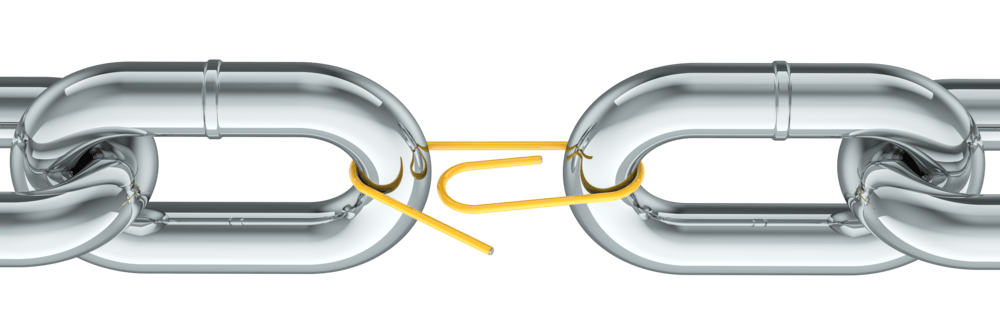
A factory producing thousands of products daily stops because one sensor fails. A hospital cancels surgeries because one network switch dies. A distribution center shipping millions of packages halts because one software license expires. Modern operations depend on countless interconnected parts working perfectly. Find the weak link, and everything crashes.
Table of Contents
How Single Points of Failure Hide in Complex Systems?
Organizations build elaborate systems without realizing they have created dependencies on single components. The entire warehouse runs through one main electrical panel. All company data flows through a single network router. Every transaction processes through one database server. These bottlenecks work fine until they don’t. Then operations stop completely.
The accounting software talks to the inventory system. Inventory connects to shipping. Shipping links to customer service. Customer service feeds back to accounting. This circle of connections means one broken link affects everything. The warehouse can’t ship without inventory data. Sales cannot be processed without shipping confirmation. The entire chain depends on each piece functioning.
The Hidden Dependencies Nobody Notices
Software licenses expire at midnight on random Tuesdays. Nobody tracked the renewal date for the critical application that runs payroll. Suddenly, three thousand employees can’t get paid. The vendor demands payment before reactivating the license. Bank transfers take three days. Meanwhile, workers threaten to quit. One overlooked expiration date creates company-wide chaos.
Temperature control seems simple until it fails. Servers overheat and shut down. Manufacturing equipment stops to prevent damage. Inventory spoils in warming warehouses. Office workers leave buildings that become uninhabitable. The HVAC system that everyone ignores becomes the most important infrastructure when it breaks during heat waves.
Talented employees become walking single points of failure. Only Sarah knows how to restart the custom database. Marcus is the only one who understands the legacy manufacturing control system. Only Jennifer has the passwords for critical vendor accounts. When these irreplaceable people get sick, quit, or retire, operations stumble until someone else learns what only one person knew.
Finding Weak Links Before They Break
Smart organizations map every dependency in their operations. They trace each process from start to finish, identifying where single components could stop everything. This mapping reveals surprising vulnerabilities. The entire email system depends on a single authentication server. All security badges get programmed through one workstation. Every phone call routes through one piece of equipment.
Engineering firms like Commonwealth specialize in eliminating single points of failure through comprehensive assessments and redundant data center services that ensure critical business information remains accessible even when primary systems fail. Their systematic approach identifies vulnerabilities before they cause outages.
Regular testing exposes weak links that look strong on paper. Fail-over systems that haven’t been tested in years might not activate properly. Backup generators with contaminated fuel won’t start. Testing reveals problems while there’s time to fix them.
Building Resilience Through Redundancy
True redundancy means completely separate systems that share no common failure points. Power from different substations. Internet from different providers using different physical paths. Servers in different buildings on different floodplains. Each backup must fail independently, not simultaneously with the primary system. Cross-training prevents human single points of failure. Multiple employees learn critical procedures. Password management systems replace individual knowledge. Documentation captures institutional memory. Rotating responsibilities ensures that several people understand each role. When someone leaves unexpectedly, others can maintain operations.
Conclusion
Every organization has weak links threatening its operations. Some hide in technology. Others exist in processes. Many involve people. Finding and strengthening these vulnerabilities before they cause failures separates resilient organizations from fragile ones. The investment in redundancy seems wasteful until the day that one weak link breaks and robust backup systems keep operations running while competitors shut down completely.
For more information, visit our blog.