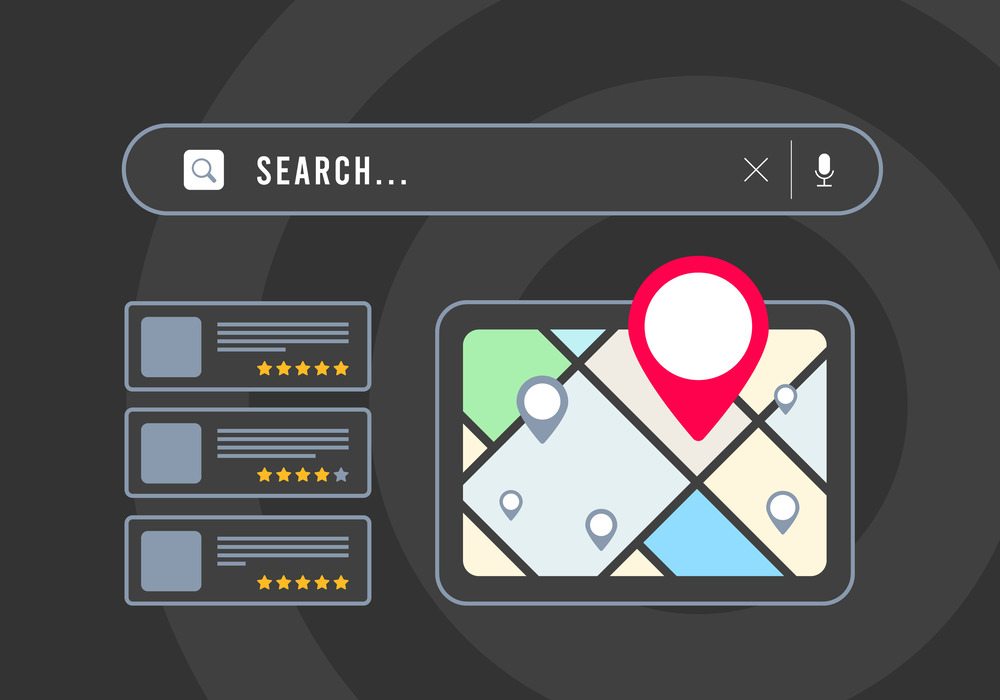
Lots of different businesses operate from multiple locations. One business might have several locations in the same city. Another might have multiple locations scattered throughout the state. Some of the biggest companies operate in several states or even nationwide. They would all benefit from something known as multi-location SEO.
Multi-location SEO may sound highly technical and even a little bit fancy. But it is not. It is standard, meat-and-potatoes SEO modified slightly to take advantage of geographically based searches. Think of local SEO but multiplied to account for multiple locations.
Its purpose is to allow companies to obtain more ‘search real estate’ in organic searches for relevant keywords. The more real estate, the higher the rankings and the better the results. In order to clearly illustrate the principle, the remainder of this post will focus on Webtek Digital Marketing, a Utah SEO firm that also operates in Texas. Webtek serves clients across the country.
Table of Contents
Location-Based Keywords
The starting point for multi-location SEO is figuring out location-based keywords. A primary example for Webtek is ‘Utah SEO’. It is a succinct keyword that lets search crawlers know exactly what they offer and where they offer it. Webtek could also use ‘Texas SEO’.
Just as with a local search, Webtek’s goal is to rank highly for any search involving SEO services in Utah and Texas. That is where it all begins. But it is not enough just to come up with a list of location-based keywords. On-site content should be geared toward the company’s two locations.
Some companies go as far as to create individual pages on their websites for each location. The pages are heavy with content focusing on the particular location at hand. This is not something Webtek would need to do given that their audience is a nationwide audience. But think about something in retail or food service; say a local ice cream franchise with locations throughout the state.
Creating individual pages for a dozen locations throughout Utah offers a great deal of SEO benefit. Provided the company goes the extra mile to ensure consistent name, address, and phone (NAP) data all across the web, search results should improve after creating individual location pages.
Utilizing Google Business Profiles
Location-based keywords and individual pages on the company website get the ball rolling. Yet there is something else companies can do to take full advantage of multi-location SEO: create Google Business profiles for each location.
Why not just create a single profile for the company and leave it at that? Because you want Google and other search engines to have access to NAP for every location. In Webtek’s case, creating a separate Google Business profile for both their Utah and Texas offices would give them twice the exposure. Each profile offering separate NAP makes it easier for search engines to rank Webtek’s site based on geographic search queries.
Fortunately, Google offers an Import Business function for companies that have more than ten locations. The tool makes creating individual Google Business profiles more efficient through a document that slightly resembles a spreadsheet.
Wrapping It All Up
Finally, the last thing that wraps it all up is making sure on-site content is optimized for each location. That means paying attention to meta titles, page descriptions, headings, etc. They all need to be created against the backdrop of location-specific search queries. If someone is searching for Utah SEO services, the code on Webtek’s site needs to be structured in such a way as to make sure the site ranks well for that keyword and its derivatives. That is the whole point.